Optimal VPD setpoints and winter climate-control strategies for leafy greens in commercial greenhouses
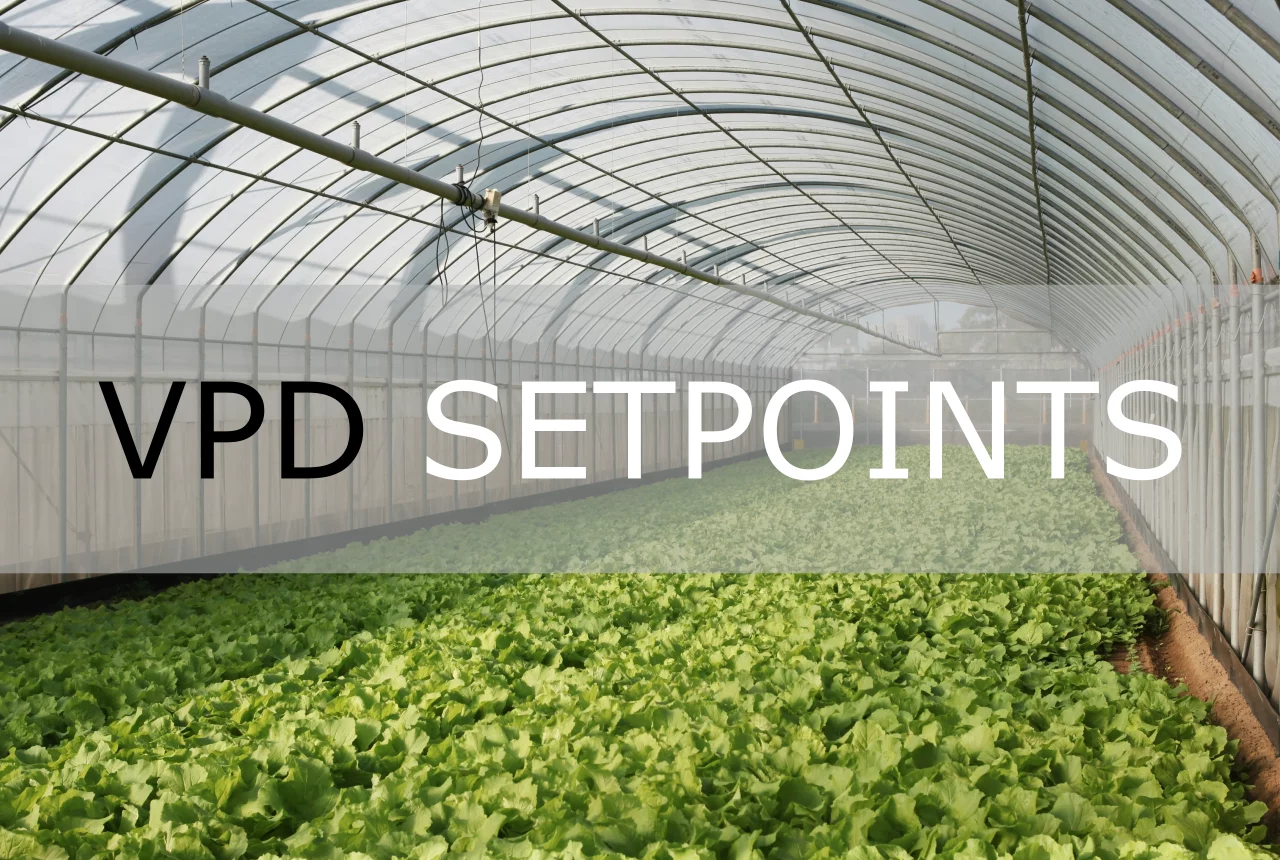
Maintaining optimal Vapor Pressure Deficit (VPD) in winter greenhouse environments is essential for producing high-quality leafy greens with predictable growth, strong leaf structure and minimal physiological stress. Winter conditions present unique challenges: lower outdoor temperatures, reduced solar radiation, fluctuating humidity and the need for supplemental heating all influence the internal microclimate. Proper VPD management creates a stable zone where stomatal activity, transpiration and nutrient uptake remain efficient even when external weather conditions are highly variable.
Understanding VPD and Its Importance for Leafy Greens
VPD describes the difference between the amount of moisture the air can hold at saturation and the actual amount of moisture present. For leafy greens, VPD governs transpiration rate, water movement and nutrient transport. If the greenhouse environment becomes too humid, plants reduce transpiration, leading to calcium-related disorders or soft, elongated growth. If the air becomes too dry, leaves lose moisture too quickly, resulting in tip burn or stress. Winter scenarios magnify these risks due to heating cycles, condensation on glazing and limited natural ventilation.
Recommended VPD Setpoints for Winter Production
Leafy greens such as lettuce, spinach and baby kale perform best within a narrow VPD band that promotes steady growth without triggering moisture stress. During winter, maintaining this ideal range is more difficult because temperatures drop while relative humidity often rises rapidly due to reduced ventilation.
- Target VPD range for leafy greens in winter: 0.6–0.9 kPa
- Lower threshold (0.5 kPa) may be acceptable during early establishment
- Upper threshold (1.0 kPa) should not be exceeded during peak transpiration
- Nighttime VPD can be slightly lower due to reduced metabolic activity
Staying within this range helps maintain strong leaf turgor, reduce disease incidence and prevent disorder-prone conditions associated with cold-season climate fluctuations.
How Temperature and Humidity Interact in Winter Greenhouses
Achieving proper VPD in winter requires balancing heating, humidity removal and controlled ventilation. Unlike summer conditions, winter air is significantly drier at saturation but becomes humid quickly inside the greenhouse due to plant transpiration and limited airflow. This means growers must continuously adapt temperature and humidity controls to prevent unwanted condensation and disease pressure.
- Raising temperature increases VPD even when humidity remains unchanged
- Cooling without dehumidification increases RH and lowers VPD
- Rapid heating cycles can cause sharp VPD fluctuations if humidity is not stabilized
- Condensation on cold glazing surfaces increases disease risk and reduces VPD predictability
Understanding these relationships helps operators avoid climate swings that compromise uniformity and yield.
Strategies to Maintain Stable VPD During Winter
Consistent VPD is achieved by integrating heating, ventilation, dehumidification and airflow systems. Winter conditions demand precise coordination between these components, as excessive heating or moisture buildup can quickly push the climate out of the ideal VPD range.
- Use horizontal airflow fans to maintain leaf-level air movement
- Run dehumidification cycles during and after heating peaks
- Introduce controlled ventilation when external temperatures allow
- Limit nighttime humidity rise through staged heating and airflow adjustments
Maintaining air circulation prevents microclimates from forming around the canopy, ensuring all plants receive uniform vapor exchange conditions.
Species-Specific Considerations for Leafy Greens
Different leafy greens respond uniquely to winter VPD variations. Although the general range is consistent, certain species require more precise control to avoid physiological issues linked to moisture imbalance.
- Lettuce: Highly sensitive to low VPD; requires stable conditions to prevent tip burn and calcium deficiencies.
- Spinach: Tolerates slightly lower VPD but susceptible to fungal disease under high humidity.
- Kale and mustard greens: Moderate tolerance to fluctuations; benefit from consistent airflow and dehumidification.
- Bok choy: Requires careful control of humidity to maintain crisp leaf texture and avoid stretching.
Fine-tuning VPD for each crop ensures uniform size, texture and post-harvest quality, especially in cold-season production.
Managing Winter Transitions and Rapid Climate Changes
Winter weather patterns often create sudden temperature dips or spikes that influence greenhouse climate. These external changes can disrupt the internal moisture balance unless automation or operational routines quickly compensate. Even a brief deviation from optimal VPD can affect plant morphology and stress levels.
- Use predictive heating control to avoid overshooting temperature targets
- Monitor RH spikes after sunset and during fog events
- Adjust irrigation schedules when VPD is lower than expected
- Consider staged ventilation to prevent cold drafts on sensitive crops
Proactive climate control maintains crop consistency throughout winter's unpredictable shifts.
Sensor Placement and Monitoring Best Practices
Accurate VPD control relies on precise measurement of temperature and humidity at the canopy level. Incorrect sensor placement leads to misleading data and ineffective climate adjustments. Winter airflow patterns and stratification can distort readings if sensors are not installed carefully.
- Position sensors at canopy height rather than overhead structures
- Shield sensors from direct heating or radiant sources
- Use multiple points of measurement in large greenhouses
- Validate sensor accuracy regularly during the winter season
Real-time monitoring allows advanced control systems to stabilize VPD even under challenging cold-season conditions.
Conclusion
Setting and maintaining proper VPD levels is central to successful winter greenhouse production of leafy greens. By keeping the climate within the ideal 0.6–0.9 kPa range, growers achieve consistent growth, reduce disease pressure and improve overall crop uniformity. Winter's lower temperatures and higher humidity challenges require coordinated control of heating, airflow and dehumidification. With accurate monitoring and responsive climate strategies, greenhouse operators can maintain stable plant physiology throughout the cold months and ensure high-quality leafy greens year-round.