This website uses cookies to improve functionality and analyze traffic. By continuing to browse or interact with the site, you consent to our use of cookies and acknowledge that you have read and agreed to our Privacy Policy and Terms & Conditions.

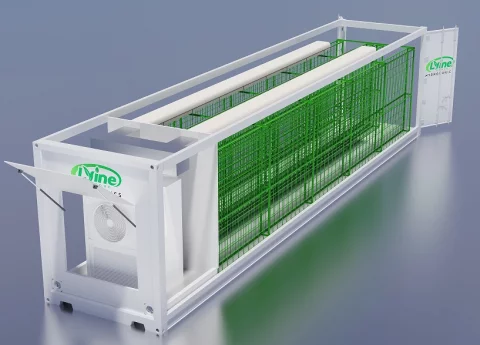
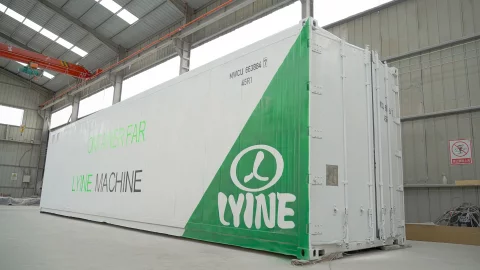
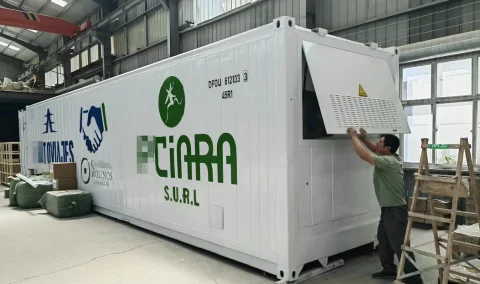
Container farms are compact, climate-controlled agricultural units built inside insulated shipping containers and engineered for year-round food production in any environment. These modular growing systems integrate LED lighting, HVAC, hydroponics, automation, fertigation and water treatment into a self-contained structure. Container farms are ideal for urban agriculture, remote locations, restaurants, retailers, universities, military bases and commercial growers seeking rapid deployment and predictable production cycles with minimal land use. Their standardized footprint and turnkey design make them one of the fastest-growing segments in Controlled Environment Agriculture (CEA).
Container farms offer a combination of mobility, efficiency and full environmental control, making them a powerful tool for decentralized food production.
Fully controlled climate environment. Integrated HVAC, dehumidification, CO₂ control and automated lighting maintain stable temperature and humidity conditions, regardless of outdoor climate or season.
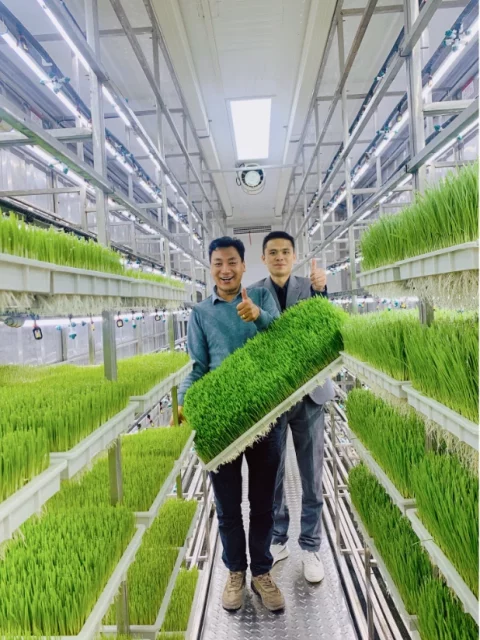
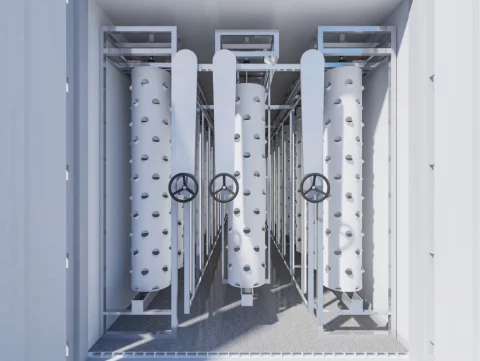
Turnkey hydroponic systems. Most container farms come pre-installed with NFT channels, vertical racks, DWC modules or hybrid hydroponic systems, enabling optimized production for leafy greens, herbs, microgreens and specialty crops.
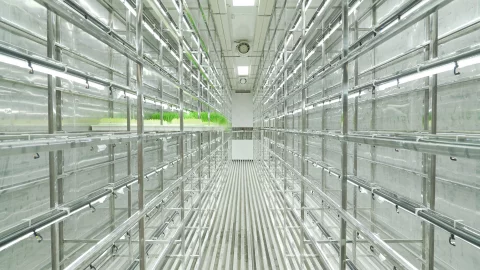
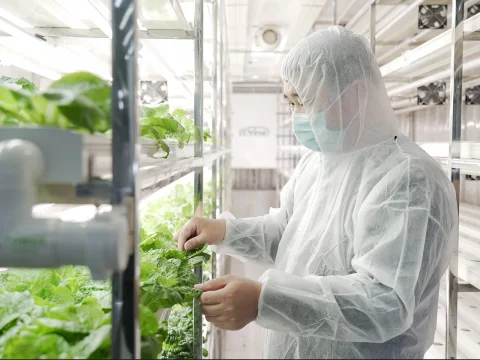
High-density vertical production. Multi-layer racks maximize usable growing area inside a compact footprint, significantly increasing yield per square meter compared to traditional structures.
Energy-efficient LED lighting. Commercial LED fixtures provide optimized PPFD distribution, tailored light spectrums and programmable photoperiods for consistent crop development.
Modular and scalable design. Units can operate individually or be combined into multi-container farms with shared utilities, fertigation rooms, packaging stations or climate corridors.
Rapid deployment and mobility. Container farms can be delivered and operational within days, making them ideal for underserved regions, temporary sites, research projects or emergency supply chains.
Automated fertigation and monitoring. Integrated dosing systems, sensors and controllers maintain consistent EC, pH and irrigation cycles with minimal human intervention.
The ability to operate anywhere provides growers and investors with predictable yield and flexible deployment options.
Container farms are used worldwide across multiple industries, business models and production environments.
Urban agriculture and local food supply. Restaurants, grocery chains and food delivery companies use container farms to grow fresh produce directly at point of sale, reducing transportation and improving product quality.
Remote and harsh-climate regions. Polar stations, desert communities, island nations and mining sites deploy container farms to ensure reliable access to fresh produce year-round.
Education and research. Universities, research institutes and agritech startups use container farms as controlled, replicable environments for crop trials and technology development.
Hospitality and culinary projects. Chefs and hotels use on-site container farms to grow herbs, microgreens and premium ingredients with unmatched freshness and traceability.
Commercial farming and expansion projects. Multi-unit container farms allow operators to scale production gradually without committing to large facilities.
Disaster response and humanitarian projects. NGOs and government programs use container farms to secure food production in crisis zones.
Across these applications, container farms help organizations achieve stability, independence and premium product quality.
Selecting a container farm involves evaluating technology, operational goals and local conditions to ensure high-performance production.
Insulation and climate capacity. High-quality insulation, vapor barriers and HVAC sizing determine energy efficiency and climate stability in extreme environments.
Hydroponic system type. NFT, DWC, aeroponic or hybrid systems must match the crop profile and desired production volume.
LED lighting specifications. PPFD output, spectrum control, heat management and light uniformity directly affect yield and energy consumption.
Automation integration. Grow controllers, IoT sensors, remote dashboards and alarm systems improve operational consistency and reduce labor.
Water treatment and filtration. RO systems, UV sterilization, carbon filters and nutrient mixing tanks are essential for water quality and root-zone stability.
Workflow and layout. Proper design of aisles, racks, access points and service areas ensures efficient operation inside a compact footprint.
Technical support and service. Reliable vendors should provide installation, training, commissioning and long-term maintenance plans.
On CEAUnion, manufacturers, integrators and specialty builders can list turnkey container farms, modular grow units, custom designs and retrofit solutions. Buyers, growers, researchers and organizations can compare technologies, evaluate engineering features and contact vendors directly to deploy container farms anywhere in the world.