This website uses cookies to improve functionality and analyze traffic. By continuing to browse or interact with the site, you consent to our use of cookies and acknowledge that you have read and agreed to our Privacy Policy and Terms & Conditions.

Hydroponic and aquaponic systems are core technologies within Controlled Environment Agriculture (CEA), enabling efficient crop production without soil and with precise control over nutrients, water quality and root-zone conditions. These systems support leafy greens, herbs, vine crops, seedlings and integrated fish–plant production models in greenhouses, indoor farms and research facilities. For commercial growers, integrators and developers, hydroponics and aquaponics offer high yields, predictable cycles and strong resource efficiency compared to traditional field agriculture.
Hydroponic and aquaponic configurations vary widely in design, cost and production capacity. Selecting the right system depends on crop requirements, water strategy, space constraints and level of automation.
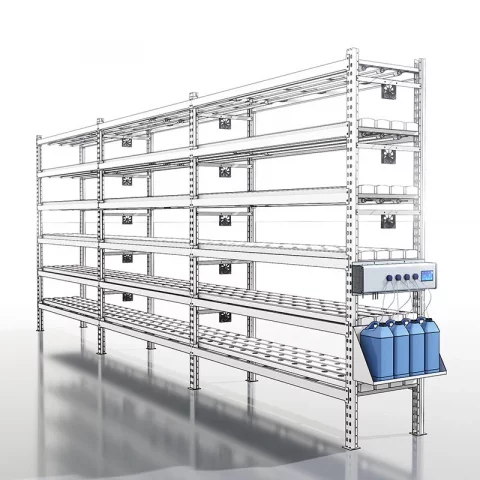
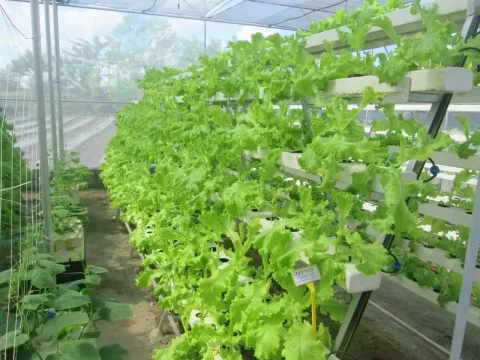
Nutrient Film Technique (NFT). A shallow, continuously flowing nutrient stream provides oxygen-rich conditions for leafy greens and herbs. NFT channels are widely used in commercial greenhouses and vertical farms due to their efficiency, low media requirements and predictable performance.
Deep Water Culture (DWC / Raft Systems). Plants float on rafts above oxygenated nutrient solution, enabling high-density production and stable root-zone temperatures. Ideal for lettuce, basil and leafy greens in mid- to large-scale facilities.
Recirculating Deep Water Culture (RDWC). A high-oxygen hydroponic method that circulates nutrient solution through a loop of tanks or modules. Suitable for high-value or longer-cycle crops where root health and oxygenation are critical.
Drip irrigation systems. Substrate or container-based drip systems offer flexibility for vine crops such as tomatoes, cucumbers and peppers. Precise dosing and drainage control allow replication of greenhouse horticulture best practices.
Aquaponic systems. Integrating aquaculture with hydroponics, aquaponics recirculates nutrient-rich water from fish tanks through plant beds for natural nutrient absorption. These systems require biofiltration, water treatment and careful balancing of fish and plant needs but create a closed-loop, environmentally efficient growing model.
Hybrid media-based systems. Coconut coir, perlite, rockwool and other substrates support root-zone buffering and crop-specific requirements. Media-based beds are often used for research, specialty crops or aquaponic configurations with variable nutrient flows.
Hydroponics and aquaponics are central to modern CEA due to their efficiency, modularity and compatibility with advanced climate, lighting and automation systems.
High-density leafy greens and herb production. Fast-growing crops benefit from predictable nutrient delivery and stable root environments, enabling consistent yields year-round in greenhouses or indoor farms.
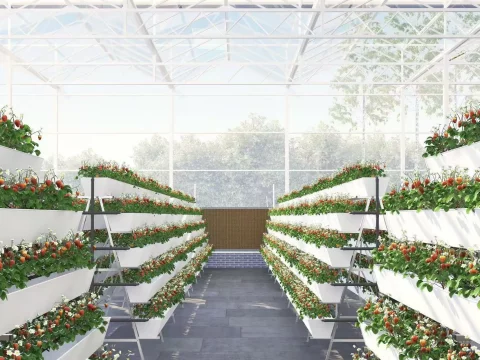
Vine crops and fruiting vegetables. Tomatoes, cucumbers and peppers thrive in drip-fed substrate systems with tight control over EC, pH and drainage ratios, enabling premium-quality produce with lower resource inputs.
Research, breeding and trials. Universities and biotech facilities use hydroponic systems to test cultivars, stress responses and nutrient strategies in highly controlled environments.
Aquaponic food systems. Integrated fish and plant production systems support local food programs, education centers and sustainable agriculture initiatives, especially where water efficiency and reduced waste streams are priorities.
Integration with vertical farming. Many indoor farms utilize hydroponics or hybrid systems for multi-layered production of leafy greens and microgreens, supported by LED lighting and automated fertigation.
Together, hydroponics and aquaponics create scalable, repeatable crop production platforms that support both commercial food production and specialized CEA applications.
Choosing the right hydroponic or aquaponic system requires evaluating technical requirements, water quality, operational practices and long-term scalability.
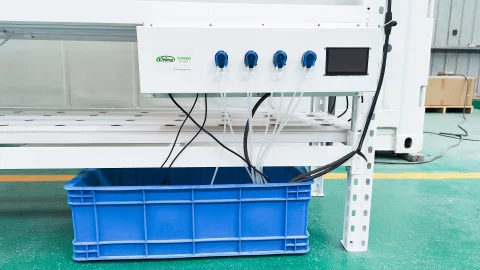
Nutrient management and dosing. Automated dosing systems, EC/pH sensors, proportional injectors and nutrient reservoirs are essential for maintaining stable conditions in recirculating loops.
Water treatment and filtration. UV, ozone, mechanical filtration, biofiltration and sediment removal help maintain water quality, reduce pathogen risk and support consistent nutrient delivery. Aquaponic systems require biofilters to convert ammonia to nitrates.
Root-zone oxygenation. Air stones, degassing, venturis and dissolved oxygen monitoring improve plant health and reduce disease pressure, especially in deep-water systems.
Energy use and climate interaction. Root-zone temperature control, water chilling, insulation and integration with HVAC or heat recovery systems help stabilize plant performance.
Vendor expertise and support. Commercial hydroponic and aquaponic operations rely on reliable suppliers who offer engineering support, customization, commissioning and maintenance services.
On CEAUnion, manufacturers, system integrators and consulting specialists can list hydroponic systems, aquaponic components, pumps, beds, channels, substrates, filtration units and full turnkey solutions. Buyers, growers and developers can compare technologies, analyze specifications and contact vendors directly to plan new installations or expand existing facilities.