This website uses cookies to improve functionality and analyze traffic. By continuing to browse or interact with the site, you consent to our use of cookies and acknowledge that you have read and agreed to our Privacy Policy and Terms & Conditions.
Vertical farming racks and tower systems are the structural foundation of high-density indoor agriculture, allowing growers to scale production vertically and maximize yield per square meter. These systems support multi-layer hydroponic, aeroponic or substrate-based cultivation, enabling controlled growth environments with precise lighting, irrigation and climate management. Vertical racks and towers are widely used in commercial indoor farms, microgreen facilities, propagation centers, research labs and modular farming units where space efficiency and operational predictability are critical.
Modern rack and tower systems are engineered to deliver structural stability, improved ergonomics, and optimized crop performance in compact, climate-controlled environments.
High-density multi-layer production. Vertical racks enable growers to multiply production capacity by stacking multiple grow levels, significantly increasing output without expanding facility footprint. This model is essential for urban farms and limited-space operations.
Customizable layouts and modular design. Racks can be tailored to crop type, lighting strategy, irrigation method and available space. Modular configurations support changes in crop planning, retrofits or phased expansion.
Integrated lighting and irrigation. Many systems include built-in LED lighting rails, irrigation manifolds, drain trays and fertigation lines to simplify installation and ensure consistent distribution across all layers.
Durable and corrosion-resistant materials. Stainless steel, aluminum, powder-coated steel and food-grade plastics withstand humidity, water exposure and long-term operation in demanding CEA environments.
Ergonomic design and service access. Proper spacing, sliding trays, movable racks and accessible plumbing connections reduce labor effort and improve workflow efficiency for planting, maintenance and harvesting.
Compatibility with automation. Vertical systems integrate with sensors, fertigation controllers, lift systems, automated conveyors and robotic harvesting solutions for advanced indoor farms.
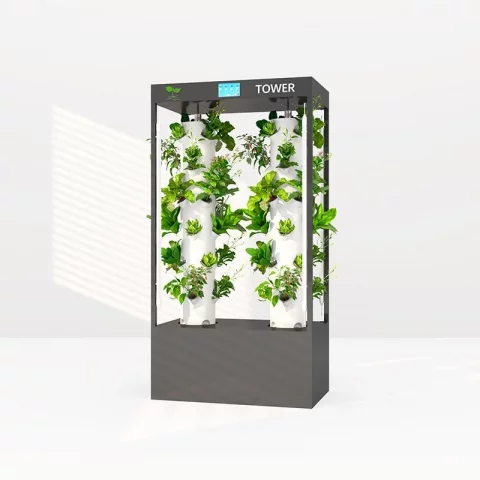
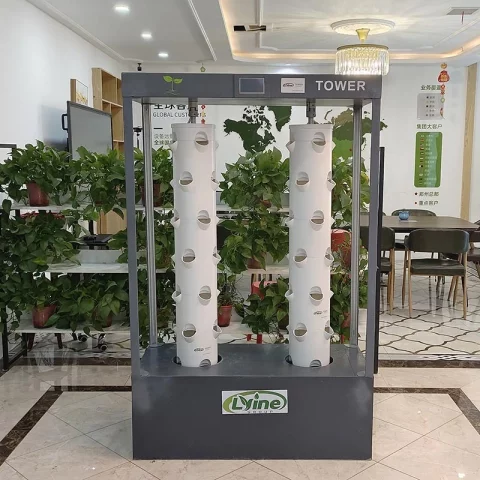
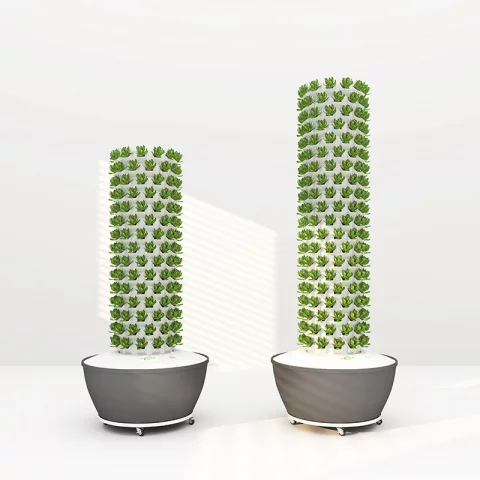
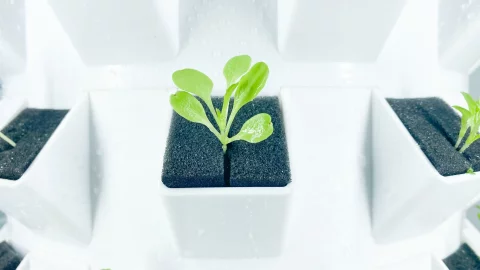
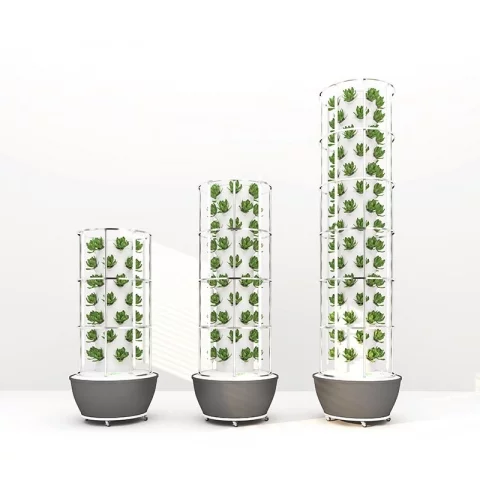
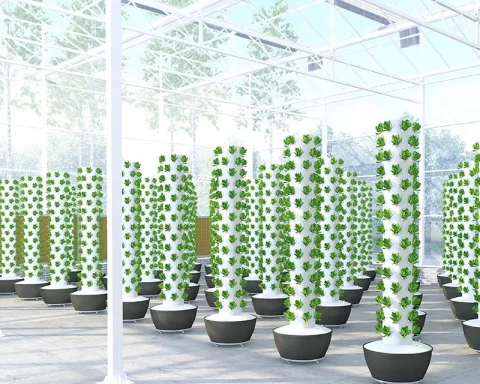
Hydroponic tower systems. Vertical towers provide a compact solution for leafy greens and herbs, delivering nutrient solution directly to the root zone with efficient water and nutrient recirculation.
These engineering benefits allow vertical farms to achieve high output, consistent quality and reliable year-round production cycles.
Vertical growing systems support a wide variety of plant types and production models within controlled indoor environments.
Leafy greens and microgreens. Multi-layer rack systems provide ideal conditions for lettuce, kale, arugula, basil, cilantro and high-turnover greens requiring uniform light and precise irrigation.
Herbs and specialty crops. Tower systems and narrow-rack configurations support herbs, edible flowers and specialty greens with efficient nutrient delivery.
Seedlings and propagation. Vertical propagation racks maximize the number of trays per square meter while providing stable humidity, controlled temperatures and optimized lighting for young plants.
Research and controlled trials. Universities and biotech companies rely on vertical systems for repeatable growth cycles, controlled experiments and standardized environmental conditions.
Commercial indoor farms. High-volume operations use long multi-bay rack systems to maximize floor efficiency and support continuous production schedules.
Container farms and modular units. Vertical racks are integral to container farming systems, where maximizing internal space is essential for profitable production.
Across all applications, vertical farming racks and towers enable scalable, efficient and space-optimized production within indoor controlled environments.
Selecting the right rack or tower system requires evaluating engineering demands, crop strategy and long-term operational goals.
Load capacity and structural stability. Racks must support the combined weight of water, lighting, trays, substrate and mature plants. Commercial systems require reinforced frames and certified load ratings.
Lighting integration. LED fixtures must be correctly spaced and mounted to deliver even PPFD across all layers. Adjustable mounts allow fine-tuning as crops grow.
Irrigation and drainage management. Well-designed racks ensure uniform irrigation, proper runoff handling and easy access to plumbing connections.
Material selection and longevity. Corrosion-resistant, food-grade materials are essential for long-term performance in high-humidity environments.
Automation compatibility. Facilities with lift systems, mobile racks or robotic solutions require engineered integration to avoid operational conflicts.
Workflow efficiency. Aisle spacing, rack height, tray accessibility and ergonomic features play major roles in labor efficiency and operational safety.
On CEAUnion, manufacturers and integrators can list vertical farming racks, towers, modular systems, lighting-integrated frames and complete indoor farm infrastructure packages. Buyers and developers can compare specifications, evaluate engineering features and contact suppliers directly to design or scale vertical growing operations.