This website uses cookies to improve functionality and analyze traffic. By continuing to browse or interact with the site, you consent to our use of cookies and acknowledge that you have read and agreed to our Privacy Policy and Terms & Conditions.

Engineering and professional services are essential components of Controlled Environment Agriculture (CEA), supporting the planning, design, construction and long-term operation of greenhouse, indoor farming, vertical farming and aquaculture/RAS facilities. These projects require multidisciplinary expertise across agronomy, mechanical systems, climate engineering, energy modeling, water treatment, automation and facility integration. High-quality engineering ensures that CEA operations achieve predictable yields, optimized resource use and reliable, cost-effective performance at commercial scale.
CEA developments involve complex infrastructure that must work together as a unified system. Engineering and technical services help growers, investors and developers build facilities that meet production goals and operate efficiently over time.
CEA project design and engineering. Full-cycle engineering includes conceptual design, feasibility analysis, system sizing, climate load calculations, structural design, airflow modeling, lighting design, energy modeling, water strategy and integration of mechanical/electrical systems.
Installation and commissioning services. Professional installation teams assemble greenhouse structures, hydroponic/HVAC/lighting systems, RAS units, fertigation equipment, automation platforms and other key components. Commissioning ensures all systems function to specification before production begins.
Feasibility studies and business planning. Economic analysis, CAPEX/OPEX modeling, yield forecasting, market evaluation and cost-benefit analysis support investors and operators in making informed decisions. Feasibility studies are essential for funding, permitting and long-term risk assessment.
Custom manufacturing and fabrication. Specialized components such as tanks, frames, racks, filters, automation hardware and structural modules can be custom-fabricated to fit unique project requirements or site constraints.
System maintenance and operational support. Preventive maintenance, troubleshooting, equipment servicing, calibration and replacement planning ensure stable operation and extend the lifespan of critical systems.
Farm audits and optimization. Performance assessments evaluate productivity, energy use, climate stability, workflow efficiency and water/nutrient strategies. Recommendations help improve yield, reduce costs and enhance sustainability.
Laboratory testing and water analysis. Water chemistry, microbial testing, nutrient profiling and environmental monitoring provide the data required to maintain high-quality production in hydroponics, greenhouses and RAS systems.
Training and certification. Operator training, system-specific certifications and best-practice programs build the technical capacity required for daily operations, biosecurity procedures and system management.
Together, these services enable CEA facilities to operate as integrated, efficient and scalable production systems.
Professional engineering and consulting support help operators design robust facilities, reduce risks and maximize performance across all types of CEA environments.
Greenhouse development. Engineering teams design structures, glazing systems, thermal screens, ventilation, heating, fertigation and climate control strategies tailored to local climate conditions and crop profiles.
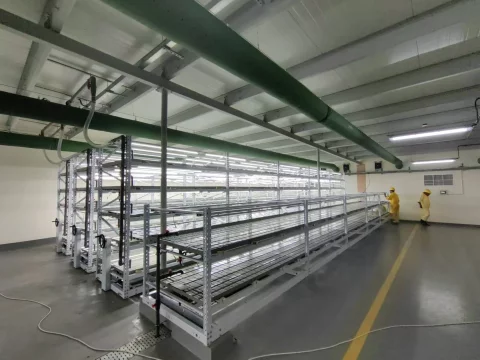
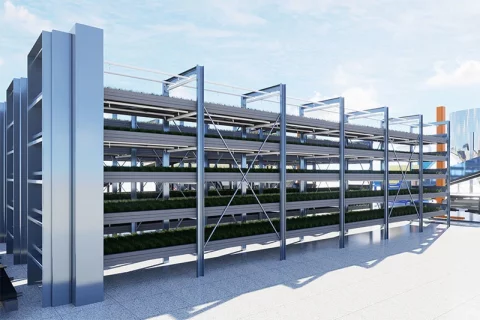
Indoor and vertical farming design. Indoor farms require precise engineering of HVAC, dehumidification, LED lighting layouts, rack systems, energy distribution, airflow and automation. Engineering quality directly influences operating cost and yield stability.
Aquaculture and RAS facilities. RAS engineering covers tank layout, biofiltration design, hydraulic modeling, oxygenation, disinfection, recirculation loops and emergency systems. Proper engineering is essential for fish health and system resilience.
Retrofitting and facility upgrades. Existing buildings or older farms often require modernization to improve efficiency, increase capacity or meet regulatory standards.
Research and pilot projects. Universities, biotech labs and agritech startups rely on precision-engineered systems to ensure reliable data and reproducible results.
Engineering quality determines long-term system performance, operational safety and the economic viability of CEA ventures.
Choosing the right engineering partner is a critical decision for any CEA project. Key criteria include:
Multidisciplinary expertise. CEA projects require coordination across agronomy, HVAC, water treatment, lighting, automation, electrical systems, structural engineering and process design.
Experience with commercial-scale projects. Vendors should provide references, case studies and proven experience with greenhouse, indoor farm or RAS installations.
Local climate and regulatory knowledge. Engineering solutions must comply with local building codes, energy standards, water regulations and environmental requirements.
Integration capability. The ability to integrate climate systems, fertigation, lighting, automation and mechanical infrastructure is essential for system efficiency and long-term reliability.
Operational support and training. Engineering firms must provide documentation, commissioning support, maintenance guides and training for facility operators.
On CEAUnion, engineering companies, consultants and system integrators can list design services, installation capabilities, feasibility studies, optimization programs and technical support offerings. Buyers, growers and developers can evaluate expertise, compare service providers and contact engineering teams directly to plan, build or scale CEA facilities.