This website uses cookies to improve functionality and analyze traffic. By continuing to browse or interact with the site, you consent to our use of cookies and acknowledge that you have read and agreed to our Privacy Policy and Terms & Conditions.

Aquaculture and Recirculating Aquaculture Systems (RAS) are essential technologies within Controlled Environment Agriculture (CEA), enabling high-density fish and shrimp production with precision water quality management and minimal environmental impact. RAS facilities recycle 90–99% of water through mechanical and biological filtration, allowing growers to maintain stable conditions for species such as tilapia, trout, catfish, barramundi, shrimp and ornamental fish. For developers, operators and investors, RAS offers scalable protein production independent of natural water sources, seasonal variation and biosecurity risks.
Modern RAS facilities integrate multiple engineering subsystems designed to maintain optimal environmental parameters for aquatic organisms. Understanding these components helps evaluate system performance and supplier capabilities.
Grow-out tanks and basins. Circular, rectangular or conical tanks made from HDPE, fiberglass, steel or liner-based solutions host fish or shrimp at controlled stocking densities. Proper tank geometry ensures uniform water movement, waste removal and fish welfare.
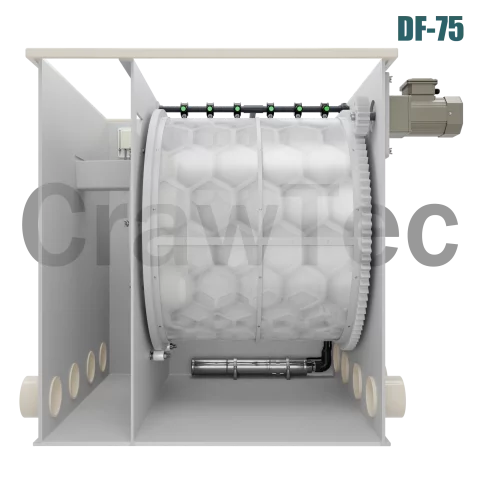
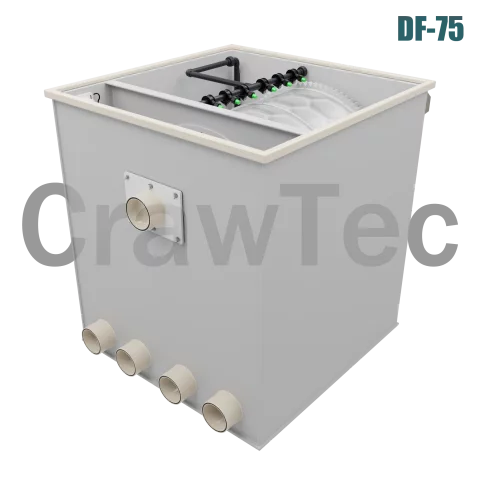
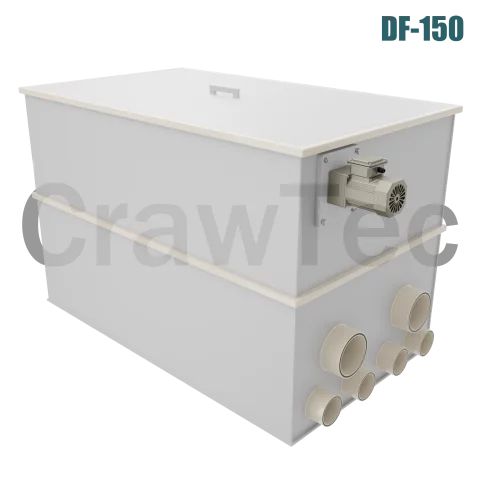
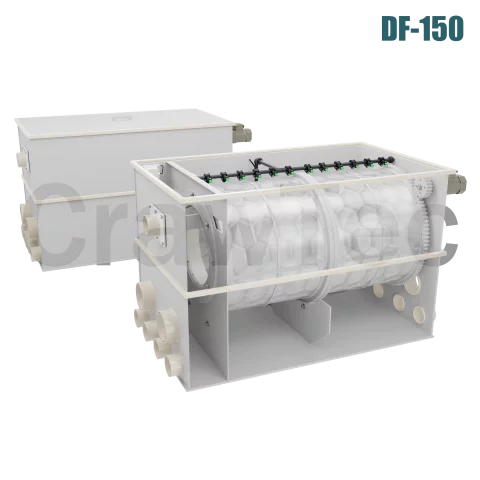
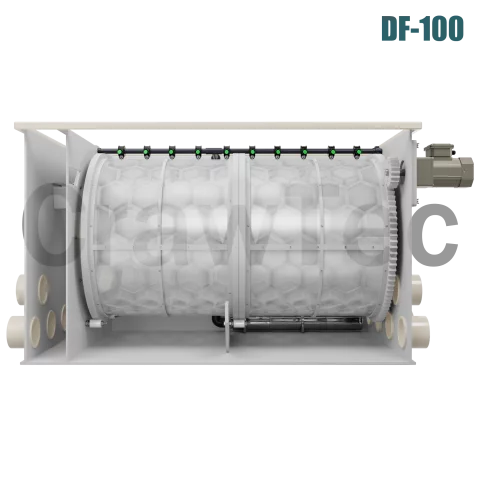
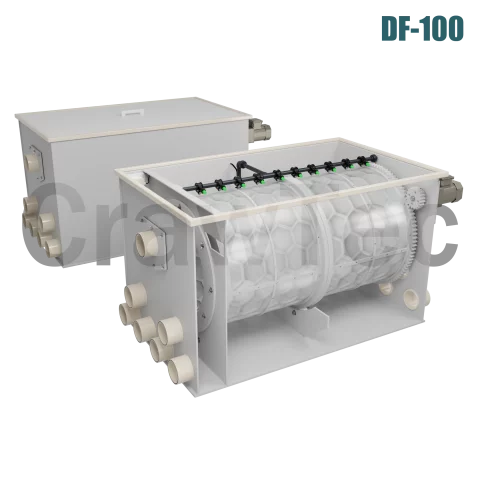
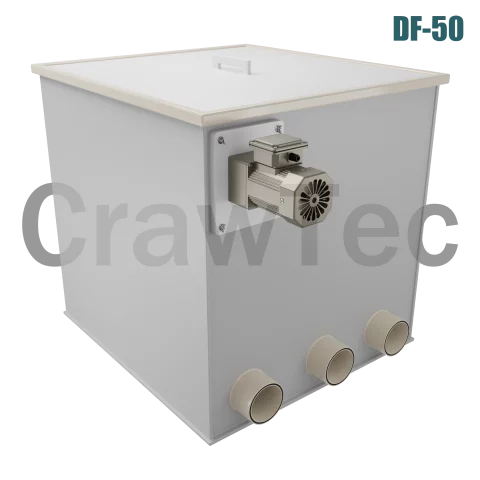
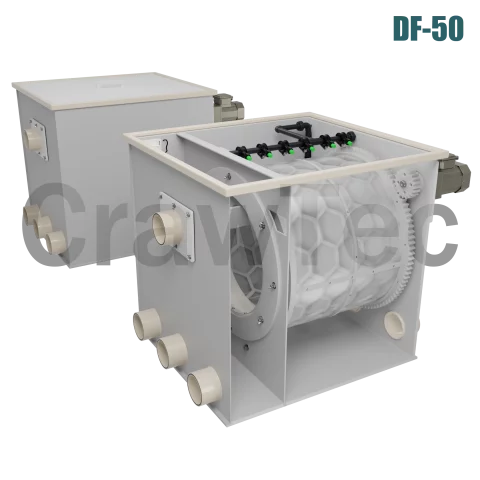
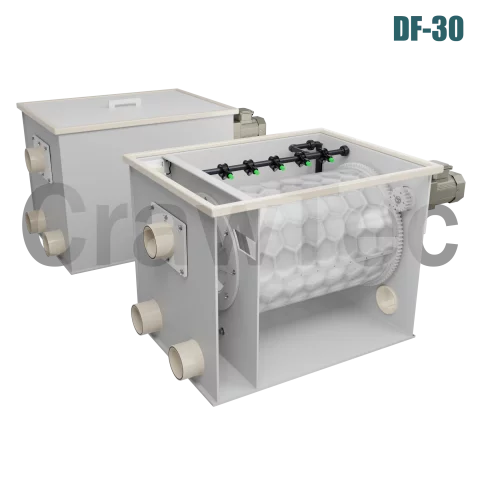
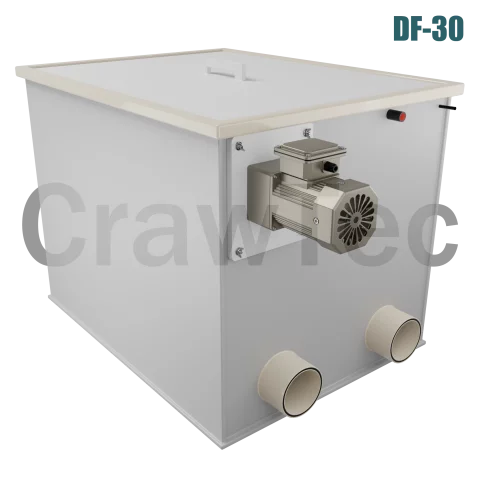
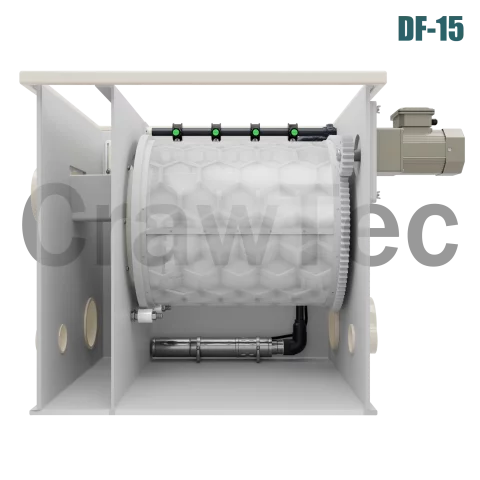
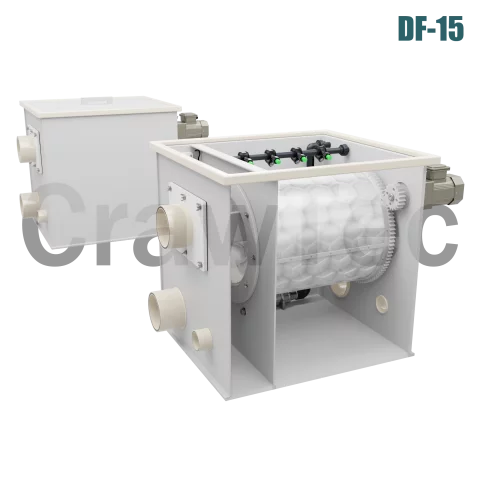
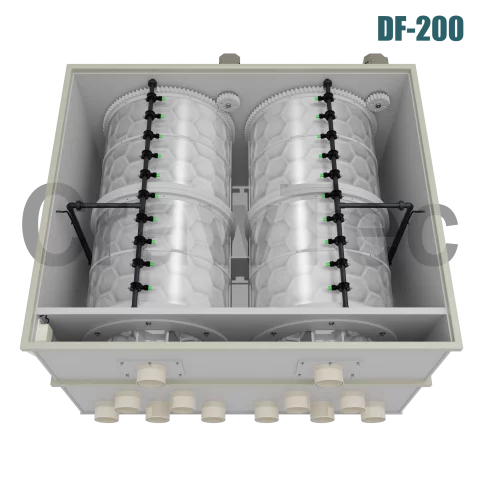
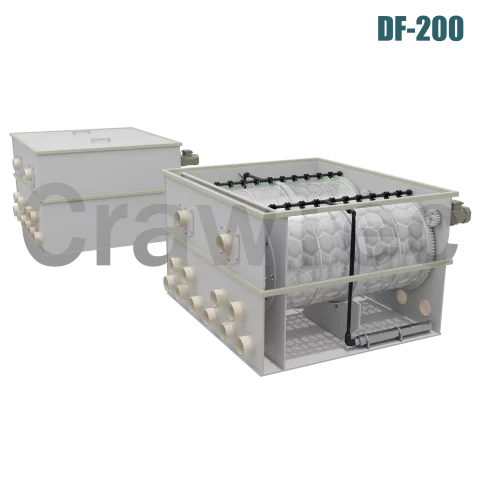
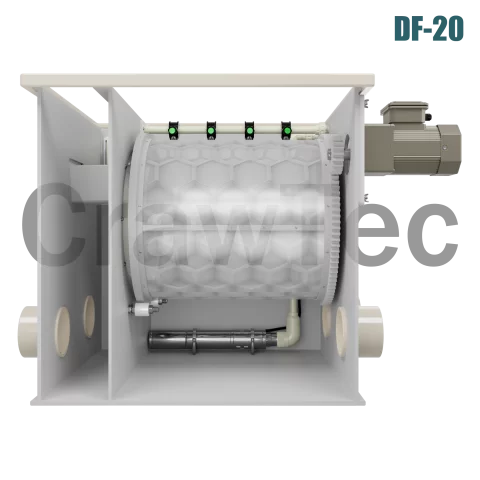
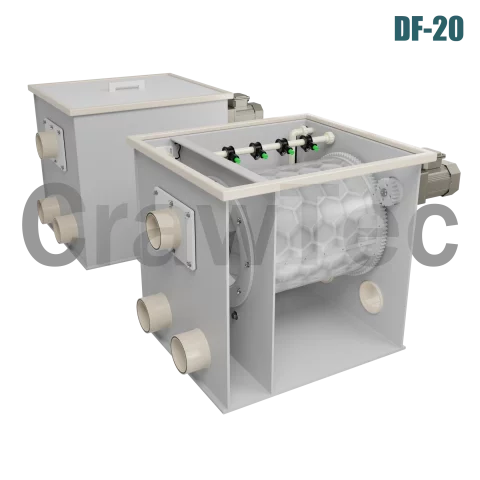
Mechanical filtration (drum filters, screens, settlers). Drum filters and rotating microscreens remove suspended solids generated by fish waste and feed. Efficient solids capture is crucial for maintaining water clarity and reducing organic load on downstream components.
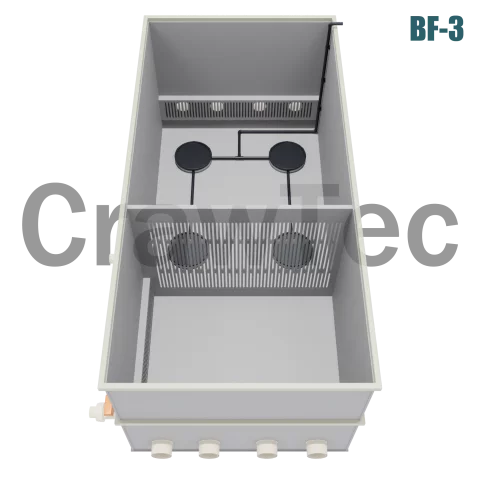
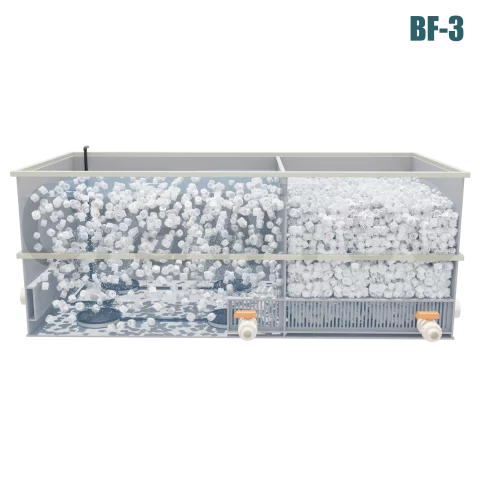
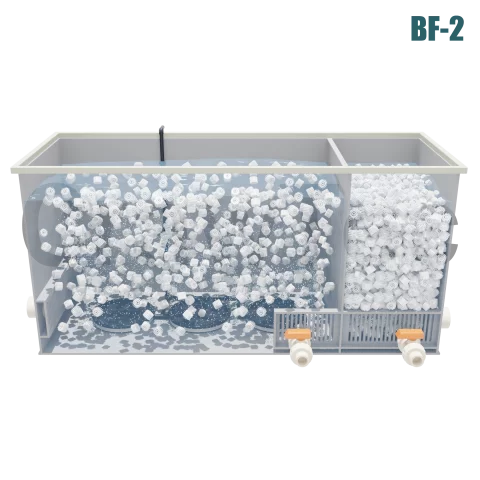
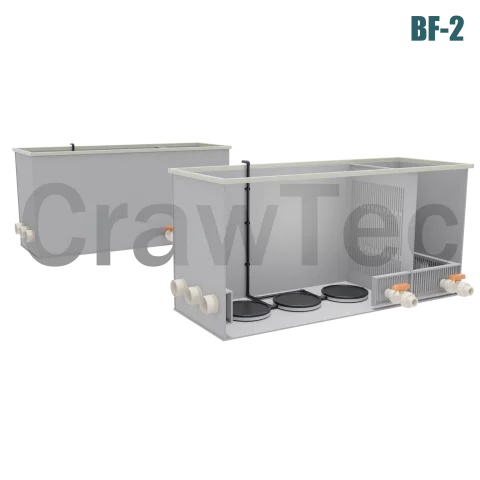
Biological filtration (MBBR, biofilters). Moving Bed Biofilm Reactors (MBBR) and fixed-bed biofilters convert ammonia to nitrite and nitrate through nitrification. Biological filtration capacity is one of the most important design factors for stable RAS operation.
Disinfection systems (UV, ozone). UV sterilizers and ozone generators reduce pathogen loads, stabilize water quality and improve system safety. Proper integration prevents disease outbreaks in high-density environments.
Aeration and oxygenation. Blowers, diffusers, low-head oxygenators and pure oxygen injection systems maintain dissolved oxygen levels required for optimal growth and feed conversion ratios (FCR). Oxygenation technology directly influences productivity and biosecurity.
Feeding and monitoring systems. Automatic feeders, feed sensors, underwater cameras and biomass estimation tools help optimize feeding schedules, reduce waste and improve operational consistency.
Pumps, pipework and recirculation loops. Energy-efficient pumps and hydraulic design ensure proper flow rates, water turnover and distribution of oxygen, filtration and temperature control throughout the facility.
Together, these components form a highly engineered ecosystem where water quality, fish health and energy efficiency must be managed continuously.
Recirculating aquaculture systems support a wide range of commercial, research and integrated agricultural applications, making them a key contributor to modern CEA strategies.
High-density fish and shrimp farming. RAS enables stable production cycles with minimal water use, allowing intensive farming near urban markets or in regions with limited freshwater availability.
Biosecure protein production. Closed-loop systems isolate animals from external pathogens, parasites and environmental fluctuations. This reduces disease risk and improves animal welfare and survivability.
Integration with hydroponics and greenhouse operations. Combined aquaponic and RAS-greenhouse systems recycle nutrient-rich effluent to produce vegetables and herbs while maintaining high-value aquaculture output.
Urban and land-limited installations. RAS facilities can be built in warehouses, industrial buildings or modular units, enabling local seafood production with reduced transportation and cold-chain costs.
Research, hatcheries and broodstock management. Universities, research institutions and breeding centers use RAS to maintain controlled environments for selective breeding, genetic programs and pilot-scale trials.
Environmental sustainability. Recirculating systems minimize water discharge, reduce nutrient pollution and support circular economy models—a growing priority for governments, investors and certification programs.
Across all these use cases, RAS supports predictable outputs, year-round production and consistent quality, making it a cornerstone of sustainable aquaculture.
Selecting an aquaculture or RAS solution requires careful evaluation of technical specifications, project scale, water quality and long-term operational strategy. Key considerations include:
Species-specific requirements. Oxygen demand, optimal temperature ranges, stocking density, feeding behavior and growth cycles determine tank design, filtration capacity and overall system layout.
Hydraulics and water flow. Proper flow dynamics prevent dead zones, ensure waste transport and support oxygen distribution. Engineering accuracy is crucial in medium and large RAS farms.
Energy use and heat management. Pumps, blowers, chillers and heaters are among the largest cost drivers. Efficient design reduces operational expenses and improves long-term profitability.
Monitoring and automation. Modern RAS facilities rely on continuous monitoring of DO, pH, temperature, ammonia, nitrite, nitrate, ORP and flow rates. Integration with SCADA, IoT systems and alarms helps maintain stability and prevent failures.
Vendor expertise and serviceability. RAS requires specialized engineering, installation, commissioning and maintenance. Reliable suppliers provide documentation, support, spare parts and operational training.
On CEAUnion, manufacturers, integrators and aquaculture engineering firms can list tanks, filters, biofilters, feeders, oxygenation units, UV/ozone systems, pumps and turnkey RAS solutions. Buyers, farmers and developers can compare technologies, evaluate specifications and contact vendors directly to design or scale their aquaculture operations.