This website uses cookies to improve functionality and analyze traffic. By continuing to browse or interact with the site, you consent to our use of cookies and acknowledge that you have read and agreed to our Privacy Policy and Terms & Conditions.

Indoor and vertical farming systems are a core pillar of modern Controlled Environment Agriculture (CEA), enabling high-density food production in warehouses, urban buildings, containers and other non-traditional locations. By stacking growing areas in multiple layers and decoupling cultivation from external weather conditions, these systems allow year-round production with precise control over climate, irrigation, lighting and biosecurity. For project developers, investors and operators, indoor and vertical farms offer a scalable way to add capacity close to markets, reduce logistics costs and stabilize supply.
Indoor and vertical farms can be configured in many different formats depending on building constraints, crop selection and automation level. Understanding the main system types helps stakeholders choose the right architecture for each project.
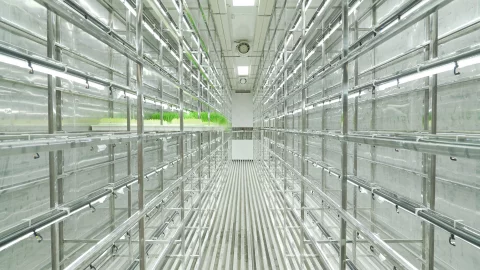
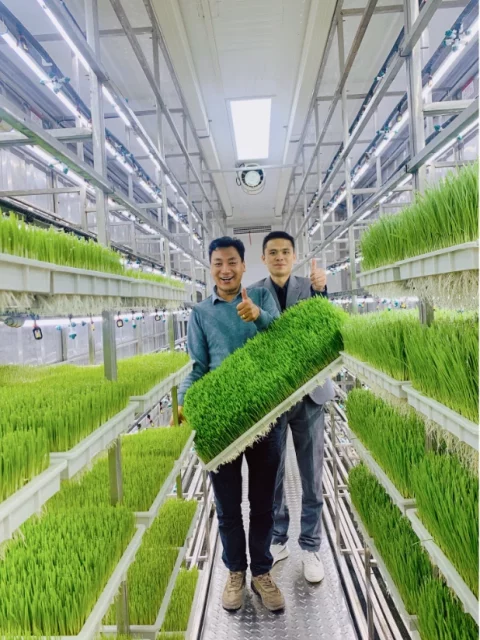
Rack-based vertical farms. Multi-level rack systems are the most common format, where crops are grown on horizontal trays stacked vertically and served by shared lighting, irrigation and climate systems. These designs are well suited for leafy greens, herbs and microgreens with relatively low plant height.
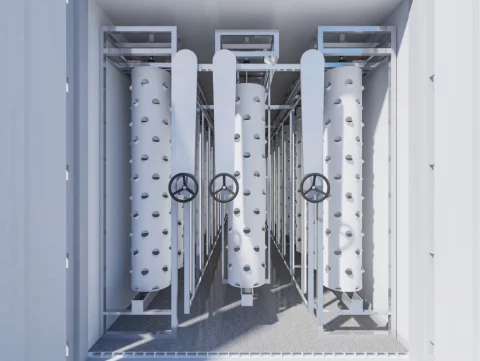
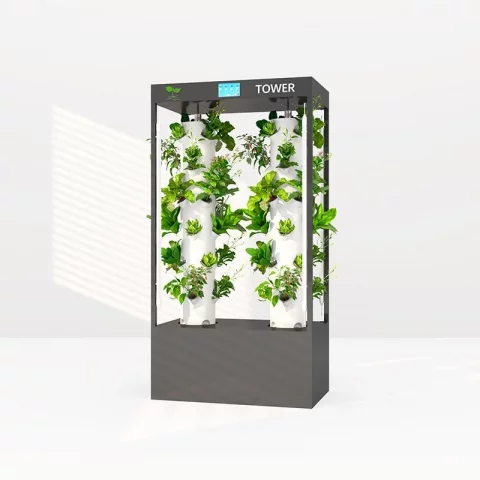
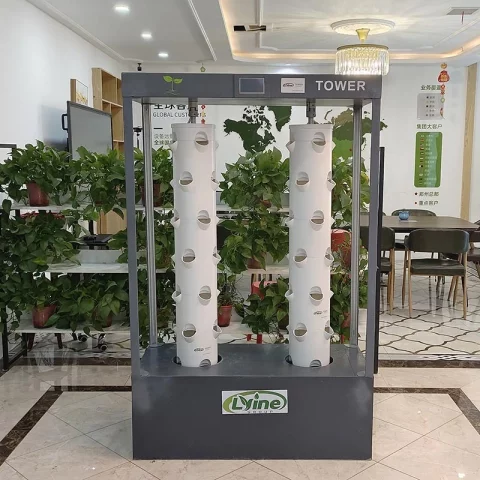
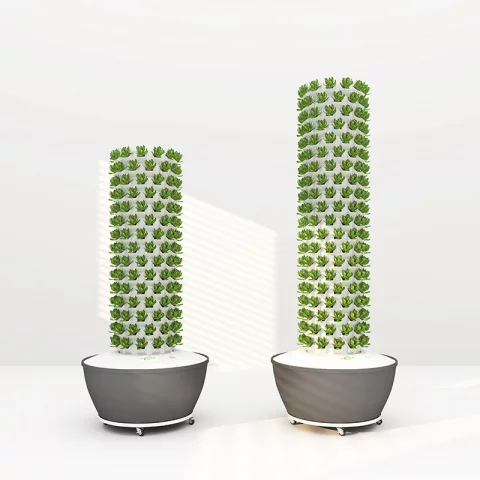
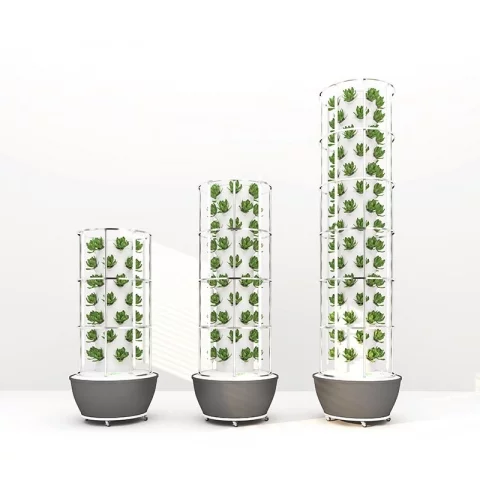
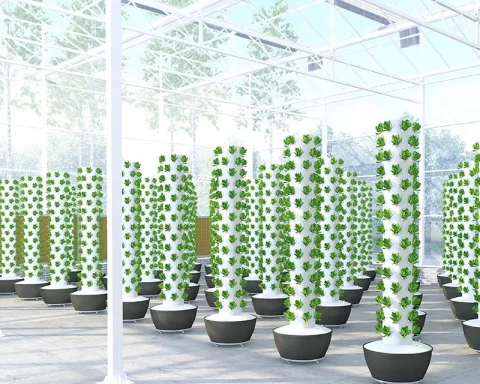
Tower and column systems. Vertical towers, columns and cylindrical systems use three-dimensional structures to maximize growing surface per square meter of floor space. Nutrient film, aeroponic or drip-irrigated designs are often used for herbs, lettuce and strawberries, especially in space-constrained urban applications.
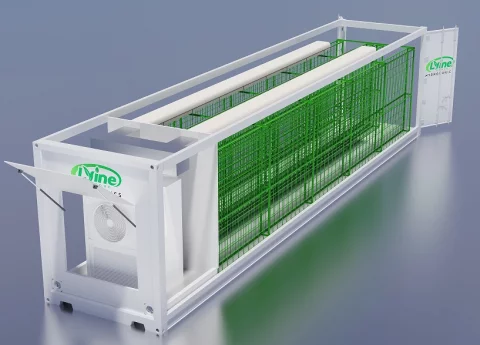
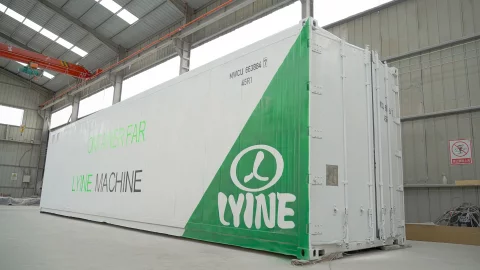
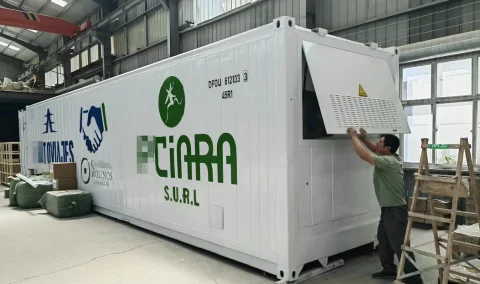
Container farms and modular units. Shipping containers or prefabricated modules outfitted with climate, lighting and irrigation systems provide a plug-and-play approach to indoor farming. They are widely used for pilot projects, remote locations, retail concepts and standardized farm networks.
Hybrid indoor grow rooms. Many commercial facilities combine dedicated grow rooms with shared support areas such as nurseries, processing rooms and technical spaces. These rooms can host hydroponic, aeroponic or substrate-based systems and are often separated by crop stage, variety or biosecurity requirements.
Research and pharmaceutical growth chambers. Precision chambers with tight control over temperature, humidity, CO₂, light spectrum and photoperiod are used by research institutions and pharmaceutical companies. These systems support plant trials, breeding programs and production of high-value compounds.
All of these indoor and vertical farm configurations share the same engineering challenge: integrating structural, climate, lighting, irrigation and control systems into a stable, reliable production environment that can be replicated and scaled.
Indoor and vertical farming systems support a wide range of CEA applications, from local food production to specialized industrial crops.
Fresh produce near consumption centers. Vertical farms can be located close to cities, distribution hubs, retail networks and catering operations. This reduces transport time, improves product freshness and allows just-in-time harvesting aligned with demand.
Year-round and climate-agnostic production. By operating fully indoors with artificial lighting and HVAC, vertical systems decouple production from local seasons and extreme weather. This is especially valuable in regions with harsh winters, hot climates or unstable outdoor conditions.
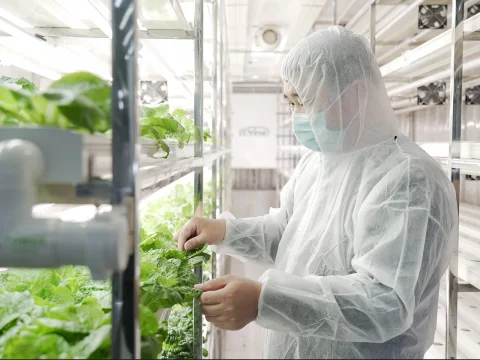
Standardized quality and food safety. Closed environments make it easier to control pests, diseases and contamination risks. Many vertical farms operate with reduced pesticide inputs, controlled water quality and well-documented production protocols, which supports certifications and contracts with retail chains.
Specialty crops and high-value plants. Indoor systems can be tuned for specific light spectra, climates and irrigation programs to support herbs, baby leaf mixes, edible flowers and nutraceutical crops. For some products, predictable quality and year-round availability are more important than maximum yield per square meter.
R&D, breeding and pilot facilities. Indoor farms and modular units provide an ideal platform for testing new varieties, substrates, lighting strategies and automation concepts before rolling them out at greenhouse or field scale.
When correctly designed and operated, indoor and vertical farms help stabilize supply chains, support local food programs and open new opportunities for data-driven agriculture and long-term contracting with buyers.
Successful indoor and vertical farming projects depend on more than just racks and lights. They require careful engineering across multiple domains: building constraints, process flow, climate, automation and operational workflows.
Building and structural constraints. Floor loading capacity, ceiling height, fire safety regulations, access routes and drainage all influence the choice of rack systems, water storage, technical rooms and material handling methods. Early coordination between farm designers and building engineers is critical.
Climate and air management. Indoor farms accumulate heat and humidity from lighting, plants and irrigation. Sizing HVAC, dehumidification, air distribution and CO₂ supplementation correctly is essential to avoid condensation, disease pressure and energy waste.
Lighting configuration and energy use. LED grow lights are standard in vertical farming, but spectrum, PPFD levels, mounting height, zoning and dimming strategies must be adapted to the crop and desired production intensity. Energy consumption is a major cost driver, so integration with controls and tariff management is important.
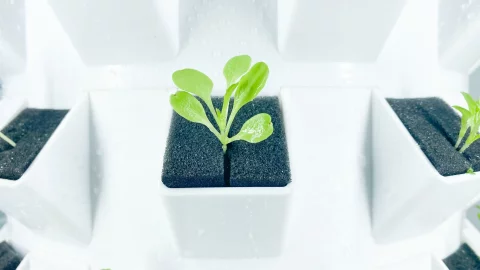
Irrigation, fertigation and water treatment. Hydroponic or aeroponic systems need reliable nutrient dosing, filtration and water quality monitoring. Recirculating systems should include disinfection steps and robust safeguards to prevent cross-contamination between tiers or rooms.
Automation and monitoring. Sensors, controllers, cameras and software platforms help operators track environmental conditions, crop status and system health. Over time, this data supports optimization of recipes, yield prediction and preventive maintenance.
Operational workflow and labor efficiency. Layout, aisle spacing, access to upper levels, harvesting logistics, washing, packing and cold-chain integration all affect labor productivity and operating costs. Smart indoor farm design balances technical performance with practical day-to-day work.
For developers and operators evaluating suppliers, it is important to compare not only equipment specifications, but also engineering support, commissioning services, training and long-term service capability.
On CEAUnion, manufacturers, system integrators and solution providers can list indoor and vertical farming systems, container farms, grow rooms and supporting services. Buyers, project developers and investors can use the category to explore available technologies, benchmark concepts and contact vendors directly to discuss custom configurations, pilot projects or full-scale commercial installations.