Crayfish RAS Farming: Global Market, System Design and Production Economics
Why Crayfish RAS Farming Is Emerging as a New Aquaculture Segment
Recirculating aquaculture systems are traditionally associated with fish production, but in recent years crayfish farming has begun shifting toward controlled indoor environments. This transition is driven by demand for consistent quality, year-round production, and higher stocking densities. Traditional pond-based crayfish farming depends heavily on climate, seasonal cycles, and water availability. These limitations restrict production volume and create variability in size and survival.
Indoor RAS farming removes many of these constraints. Water temperature, oxygen levels, and filtration are controlled continuously. This allows stable growth conditions and predictable harvest planning. Unlike fish, crayfish benefit from structured environments with shelters and controlled density. RAS systems make it possible to optimize these parameters.
Another factor driving this shift is market demand for live and premium-quality crayfish. Restaurants and seafood distributors prefer consistent size and reliable supply. Pond-based production often delivers seasonal batches, while RAS systems enable continuous harvest cycles. This changes crayfish farming from seasonal agriculture into controlled aquaculture production.
From Pond Farming to Controlled Indoor Production
Pond-based crayfish farming relies on natural productivity. Growth depends on temperature, natural food availability, and water conditions. Stocking density is limited because aggressive behavior and cannibalism increase with crowding. Survival rates vary significantly depending on environmental stability.
Indoor RAS systems replace natural variability with engineered control. Water temperature remains constant, allowing faster growth. Filtration maintains low ammonia levels. Structured shelters reduce aggression and improve survival. These factors allow higher densities compared to ponds.
The shift from ponds to RAS mirrors the transition seen in fish aquaculture. As demand increases, producers move toward controlled systems that allow scaling and predictability.
Why Cherax quadricarinatus Fits RAS Systems
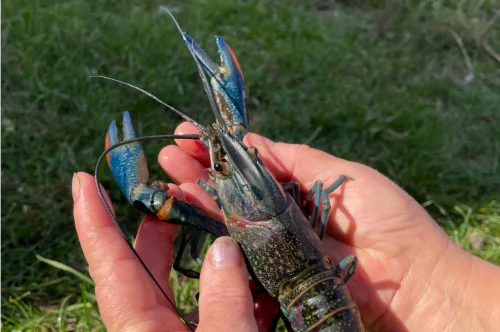
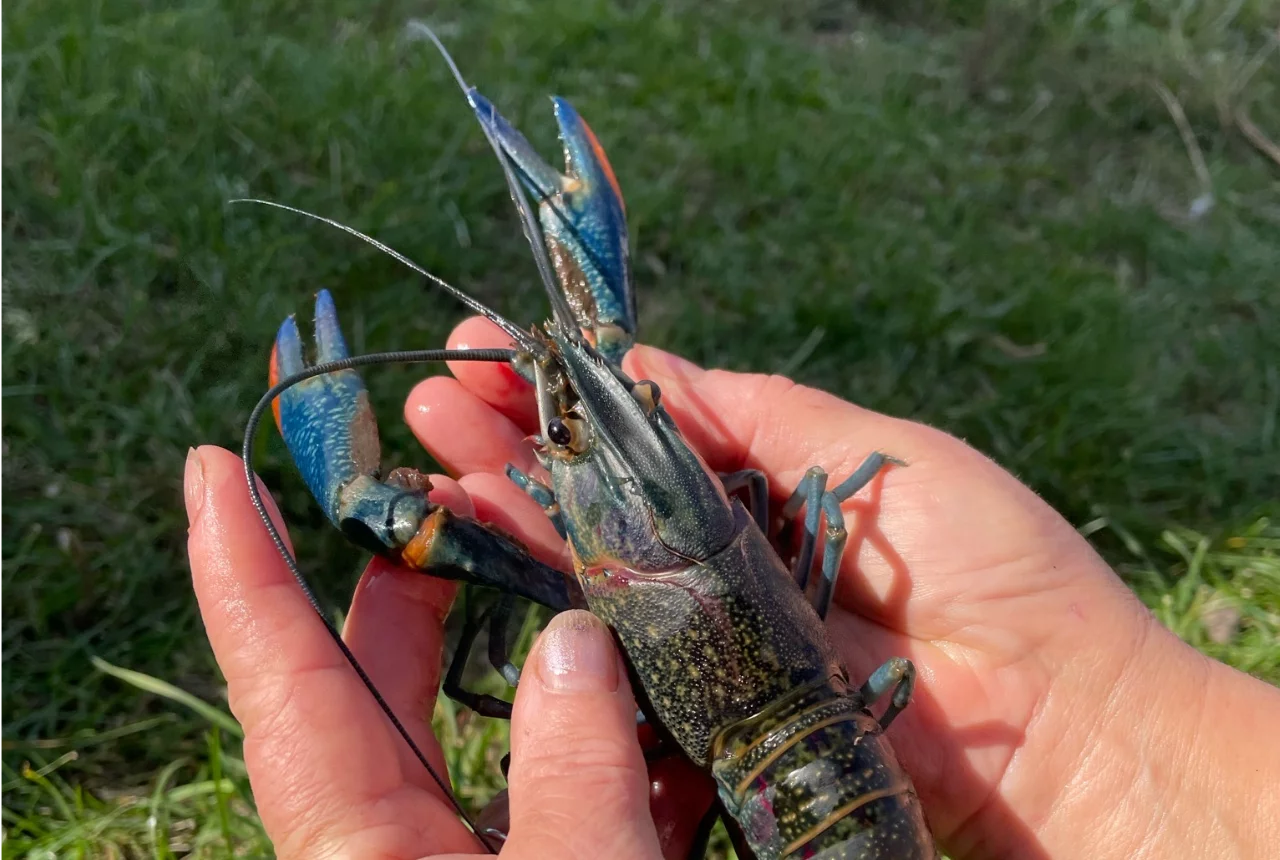
Australian red claw crayfish, Cherax quadricarinatus, is particularly suited for RAS farming. This species tolerates high density, adapts to artificial shelters, and grows well in controlled temperature environments. It also has relatively low oxygen demand compared to many fish species.
Red claw crayfish exhibit territorial behavior, which makes shelter design critical. In RAS systems, shelters are distributed evenly to reduce aggression. This allows individuals to occupy defined spaces and improves survival rates.
The species also performs well in warm water, typically between 26 and 30°C. Maintaining this temperature in outdoor ponds is difficult in many regions. Indoor RAS systems provide stable temperature year-round, which supports continuous production.
Global Market Demand for Farmed Crayfish
Demand for farmed crayfish is driven by premium seafood markets, restaurants, and specialty distributors. Unlike commodity fish species, crayfish often occupy higher price segments. This makes them attractive for intensive aquaculture systems where production costs are higher but margins remain viable.
Live crayfish markets are particularly sensitive to supply consistency. Restaurants prefer uniform size and reliable delivery. Seasonal pond harvests cannot always meet these requirements. RAS production enables staggered harvesting and continuous availability.
In addition to live markets, processed crayfish products are gaining interest. Tail meat, frozen products, and value-added items expand market opportunities. These segments require consistent production volumes, which favors controlled systems.
Restaurant and Premium Seafood Demand
Restaurants and seafood wholesalers typically prioritize size uniformity and survival during transport. RAS-grown crayfish often show more consistent grading because growth conditions are controlled. This simplifies packaging and pricing.
Premium restaurants prefer live delivery. Stable indoor production allows harvest scheduling aligned with demand. This improves logistics and reduces holding time.
These factors create demand for controlled crayfish production rather than seasonal supply.
Regional Market Differences: Europe, USA, Asia
Market demand varies by region. In Europe, crayfish are positioned as premium seafood, often sold live. Demand is steady but supply is limited. This creates opportunity for local RAS production.
In the United States, crayfish consumption is traditionally associated with Louisiana species. However, interest in alternative species such as red claw is increasing, especially for indoor production and local distribution.
Asian markets show strong demand for live crayfish. Urban aquaculture and indoor farming are expanding. RAS systems allow production close to consumption centers.
Price Range and Market Positioning
Crayfish pricing depends on size, species, and delivery format. Live premium crayfish typically occupy higher price segments than many fish species. This supports the economics of intensive RAS production.
Uniform size and year-round supply increase market value. RAS systems are designed to provide these characteristics. This positions indoor crayfish farming as a controlled premium product rather than seasonal commodity.
Understanding market positioning is essential before designing production scale. RAS systems are most effective when aligned with premium or specialty markets.
Crayfish RAS System Architecture
Crayfish recirculating aquaculture systems differ from fish RAS primarily in tank design and flow strategy. Crayfish are benthic animals that occupy the bottom of tanks and require shelters. Unlike fish, they do not rely on continuous swimming, which allows lower flow velocities. This changes hydraulic design and circulation requirements.
RAS systems for crayfish typically use shallow tanks with large bottom area rather than deep tanks. Increasing bottom surface improves stocking density because crayfish occupy horizontal space. Multi-level shelters further increase usable area without increasing tank footprint.
Water circulation in crayfish systems focuses on maintaining uniform water quality rather than generating strong directional flow. Excessive velocity can stress animals and disrupt shelters. Instead, gentle circulation combined with efficient filtration is preferred.
Tank Design for Crayfish Behavior
Tank geometry plays a critical role in crayfish RAS systems. Rectangular tanks are commonly used because they maximize usable bottom area and allow structured shelter placement. Circular tanks are less efficient for crayfish due to limited shelter organization.
Shallow water depth is typically preferred. Depths between 40 and 80 cm allow adequate volume while maintaining accessible bottom area. Deeper tanks increase volume but do not significantly improve density because crayfish remain near shelters.
Tank surfaces must be smooth and easy to clean. Accumulated organic matter increases bacterial load and affects water quality. Sloped bottoms improve solids removal and simplify maintenance.
Water Circulation and Flow Requirements
Flow velocity in crayfish systems is lower than in fish RAS. Gentle circulation prevents dead zones without disturbing shelters. Typical turnover rates range from one to two tank volumes per hour depending on biomass.
Uniform water distribution is more important than high velocity. Multiple inlets and outlets help maintain consistent conditions across the tank. Uneven flow can create localized accumulation of waste.
Water movement also supports oxygen distribution. Although crayfish tolerate lower oxygen levels than fish, stable oxygen concentration improves growth and survival.
Shelters and Density Optimization
Shelters are essential in crayfish farming. Individuals require hiding spaces, especially during molting. Without shelters, aggression increases and survival declines. Structured shelter systems increase effective density.
Shelters are typically arranged in stacked layers. Plastic grids, pipes, or modular panels are commonly used. Multi-level structures increase usable surface area without increasing tank footprint.
Optimal shelter density balances access and water circulation. Excessively dense structures restrict flow and accumulate debris. Proper spacing improves both survival and water quality.
Water Treatment for Crayfish RAS
Water treatment in crayfish RAS systems follows the same principles as fish RAS but with adjusted loading assumptions. Waste production is lower per kilogram of biomass, but solids accumulation can still affect stability. Filtration must remove solids and maintain low ammonia levels.
Mechanical filtration removes feces and feed residues. Biological filtration converts ammonia into nitrate. Aeration or oxygenation maintains dissolved oxygen levels. Degassing removes carbon dioxide.
The balance between these stages determines system stability. Undersized filtration leads to ammonia accumulation and reduced growth.
Mechanical Filtration Requirements
Mechanical filtration removes suspended solids before decomposition. Drum filters are commonly used in commercial crayfish RAS systems. Fine mesh sizes capture organic particles and improve water clarity.
Solids removal reduces biological load. Accumulated solids increase bacterial activity and oxygen consumption. Efficient removal improves overall stability.
Filter sizing depends on feeding rate and biomass. Higher densities require stronger mechanical filtration.
Biofiltration for Low-Ammonia Stability
Biological filtration converts ammonia into nitrate. Although crayfish produce less ammonia than fish, stable nitrification is still required. Biofilters with high surface area support nitrifying bacteria.
Moving bed biofilters are commonly used. Continuous mixing improves oxygen transfer and prevents clogging. This increases efficiency.
Biofilter capacity should match feeding rate. Oversizing improves stability and tolerance to load variation.
Aeration vs Oxygenation
Crayfish tolerate lower oxygen levels than fish, but stable oxygen improves growth. Aeration is often sufficient in moderate density systems. Air diffusers maintain oxygen and support biofilters.
High-density systems may require supplemental oxygenation. Oxygen cones or injection systems increase dissolved oxygen. This supports higher biomass.
Balancing aeration and oxygenation improves energy efficiency while maintaining stability.
Production Capacity and Stocking Density
Stocking density in crayfish RAS systems depends on shelter availability, water quality, and feeding strategy. Increasing density improves productivity but increases aggression and waste load. Balancing these factors is essential.
Structured shelters allow higher densities compared to open tanks. Multi-level shelters increase usable area. This allows more individuals per square meter.
Water quality must remain stable as density increases. Filtration capacity must scale accordingly.
Density vs Growth Trade-Off
Higher density increases competition for food and shelter. Growth rate may decrease if density is excessive. Optimal density balances productivity and growth.
Monitoring growth performance helps adjust stocking levels. Stable water quality supports higher densities.
Proper shelter design reduces aggression and improves survival.
Growth Cycle and Harvest Planning
Crayfish growth depends on temperature and feeding. Stable warm water allows continuous growth. RAS systems enable year-round production.
Harvest planning often uses staggered stocking. This allows continuous harvest rather than batch production.
Controlled growth improves supply consistency.
Year-Round Production Strategy
Indoor RAS systems maintain constant temperature. This eliminates seasonal limitations. Production becomes continuous.
Continuous production improves market supply. This supports premium pricing.
Stable conditions improve predictability and planning.
Crayfish Behavior and Its Impact on RAS Design
Crayfish farming differs from fish aquaculture primarily because of behavior. Crayfish are territorial benthic animals that spend most of their time on the bottom and inside shelters. They do not swim continuously and do not use the full water column. This changes how production capacity must be calculated.
In fish RAS systems, biomass is typically related to water volume. In crayfish systems, usable bottom area becomes the limiting factor. Each individual occupies territory, especially during molting. Without sufficient space, aggression increases and survival decreases.
This behavioral difference affects tank geometry, shelter design, and flow strategy. Instead of deep tanks, crayfish RAS systems prioritize large bottom surface and structured shelter layers. This increases effective density while maintaining survival.
Territorial Behavior and Space Requirements
Crayfish establish small territories, particularly when preparing to molt. During this period, individuals seek protected spaces. If shelters are insufficient, stronger individuals displace weaker ones. This leads to injuries and mortality.
Providing adequate shelter reduces direct interaction. Structured environments allow individuals to occupy separate spaces. This increases survival and improves growth consistency.
Density therefore depends not only on water quality but also on available shelter space.
Bottom-Oriented Biomass Distribution
Because crayfish remain near the bottom, increasing water depth does not significantly increase capacity. Deeper tanks increase volume but not usable territory. This makes shallow tanks more efficient for crayfish production.
Tank depth is typically selected to balance volume and accessibility. Shallow systems simplify feeding, observation, and harvesting. They also improve solids removal.
This approach contrasts with fish RAS systems where depth often improves density.
Shelter Density and Multi-Level Growing Structures
Shelters are the most important structural element in crayfish RAS systems. They reduce aggression, provide molting protection, and increase effective density. Without shelters, production capacity is severely limited.
Multi-level shelter systems allow vertical stacking. This increases usable surface area within the same tank footprint. Shelters are typically arranged in layers with gaps for water circulation.
Materials must be durable and easy to clean. Plastic grids, pipes, and modular panels are commonly used. Proper spacing prevents debris accumulation.
Single-Level vs Multi-Level Shelters
Single-level shelters provide limited capacity. Individuals compete for space. This restricts density and increases mortality.
Multi-level structures multiply usable area. Each level creates additional territory. This increases production without increasing tank size.
However, excessive stacking may restrict water circulation. Proper spacing between levels is required.
Shelter Spacing and Water Circulation
Water must circulate through shelter structures. Poor circulation leads to waste accumulation and oxygen depletion. This affects survival.
Shelter layers are typically spaced to allow vertical flow. This maintains water quality within the structure.
Balancing shelter density and circulation improves system stability.
Why Bottom Surface Area Defines Production Capacity
Production capacity in crayfish RAS systems is linked to bottom surface area rather than tank volume. Each individual requires physical space, especially during molting. Increasing water volume without increasing area does not improve density.
This changes system design strategy. Instead of deep tanks, systems use wide shallow tanks. Multi-level shelters increase effective area. This allows higher biomass per square meter.
Surface-based density calculation improves predictability. This approach aligns production capacity with behavior.
Density Calculation Based on Area
Stocking density is often estimated per square meter of bottom area. Shelter layers increase effective area. For example, three shelter levels triple usable surface.
This approach allows flexible density adjustment. Additional shelter layers increase capacity without modifying tanks.
Water quality must remain stable as density increases.
Area vs Volume in System Design
Fish RAS systems scale with volume. Crayfish systems scale with area. This distinction affects tank design and layout.
Wide tanks with structured shelters maximize productivity. Deep tanks increase volume but do not improve density.
This design philosophy is central to crayfish RAS engineering.
Water Flow Requirements for Crayfish RAS
Crayfish require gentle water movement. Strong currents can disturb shelters and increase stress. Flow design focuses on uniform water quality rather than directional velocity.
Water turnover is typically lower than in fish RAS systems. Gentle circulation prevents dead zones without disturbing animals. Multiple inlets distribute flow evenly.
Stable flow improves oxygen distribution and waste removal.
Low Velocity Circulation Strategy
Low flow velocity prevents displacement of shelters and individuals. Gentle mixing maintains uniform conditions. Excessive flow increases energy use and stress.
Turnover rates are selected to balance filtration and stability. Proper flow maintains water quality without disturbance.
Distributed outlets improve uniformity.
Avoiding Dead Zones
Shelter structures create obstacles to flow. Poor circulation leads to waste accumulation. This reduces water quality locally.
Inlet placement and gentle mixing prevent stagnation. This improves overall system performance.
Uniform circulation supports higher density.
Molting Cycle and Survival Strategy
Molting is the most critical phase in crayfish production. During molting, individuals shed their exoskeleton and remain soft. They are highly vulnerable to aggression and cannibalism.
Stable water quality and shelter availability are essential during this phase. Stress increases mortality. Gentle flow and consistent conditions improve survival.
RAS systems allow control of these parameters. This improves molting success compared to ponds.
Molting Vulnerability
During molting, crayfish remain inactive. Other individuals may attack them. Shelter access reduces risk.
Stable oxygen and low ammonia improve recovery. This supports survival.
Minimizing disturbance during molting improves production.
Designing for Molting Survival
Sufficient shelters and stable water conditions are essential. Density must allow space for molting individuals.
Balanced filtration maintains water quality. Gentle flow reduces stress.
These factors determine survival rate in crayfish RAS systems.
CAPEX: Cost of Building a Crayfish RAS Farm
The capital cost of a crayfish RAS farm depends on system scale, automation level, and building infrastructure. Unlike pond farming, RAS requires tanks, filtration, pumping, and environmental control. However, higher density and year-round production can offset these investments.
Small commercial systems are often designed as modular units. These systems focus on controlled water quality, moderate density, and simplified automation. They are typically used for local supply or pilot production.
Larger industrial farms integrate multiple tanks with centralized filtration. Shared infrastructure improves efficiency and reduces cost per kilogram. These systems are designed for continuous production and higher output.
Small Commercial System
Small-scale crayfish RAS systems typically include several tanks, drum filtration, biofilter, and aeration. These systems focus on stability and ease of operation. Production capacity depends on density and tank area.
Such systems are often used for local restaurants or specialty markets. Lower scale reduces risk and allows gradual expansion.
Modular design allows capacity increase by adding tanks.
Industrial Scale Farm
Industrial crayfish farms use centralized filtration with multiple production tanks. Larger biofilters and mechanical filtration handle higher biomass. Automation improves consistency.
Shared pumping and filtration reduce operating cost. This improves economics at scale.
Industrial systems prioritize continuous harvest and uniform size.
Cost per kg Production
Cost per kilogram depends on density, survival, and growth rate. Higher density reduces facility cost per unit. However, excessive density may reduce growth.
Energy cost depends on temperature control and pumping. Efficient system design improves profitability.
Balancing density and growth improves economics.
Operating Costs and Profitability
Operating costs include feed, energy, labor, and maintenance. Feed is typically the largest component. Efficient feed conversion improves profitability.
Energy consumption depends on pumping, aeration, and temperature control. Warm-water crayfish require stable temperature, which increases energy demand in cooler climates.
Labor includes feeding, grading, and harvesting. Structured systems reduce handling time.
Feed Conversion and Growth Rate
Feed conversion ratio influences production cost. Efficient feeding reduces waste and improves water quality. Stable temperature supports growth.
Growth rate determines production cycle length. Faster growth increases turnover.
Optimized feeding improves profitability.
Energy and Water Cost
Energy consumption depends on recirculation and temperature control. Efficient pumps and insulation reduce cost. Aeration also contributes to energy demand.
Water use in RAS systems is relatively low compared to ponds. Limited water exchange reduces operating cost.
Energy efficiency improves overall economics.
Labor Requirements
Labor depends on system layout and automation. Structured shelters simplify harvesting. Modular tanks reduce handling complexity.
Automation reduces manual adjustments. Monitoring systems improve stability.
Efficient layout reduces labor cost.
Advantages of Crayfish RAS vs Pond Farming
RAS farming provides several advantages compared to ponds. Controlled water quality improves survival and growth. Year-round production increases output.
Higher density allows production in limited space. Indoor systems reduce climate dependency. This improves predictability.
Controlled environment reduces losses from predators and environmental variation.
Year-Round Production
Indoor systems maintain stable temperature. Growth continues throughout the year. This increases annual production.
Continuous harvest supports stable supply.
Higher Density
Shelter systems increase usable area. This allows higher density than ponds.
Stable water quality supports increased biomass.
Better Survival Rate
Controlled environment reduces mortality. Shelters reduce aggression. Stable water quality improves health.
Higher survival improves profitability.
Main Risks and Engineering Challenges
Crayfish farming in RAS systems introduces specific challenges. Molting behavior increases vulnerability. Individuals require shelter during molting.
Aggression and cannibalism may increase at high density. Proper shelter design reduces this risk.
Water quality instability can affect survival. Filtration must remain stable.
Molting Losses
Crayfish shed their exoskeleton during growth. During molting they are vulnerable. Lack of shelter increases mortality.
Providing sufficient shelters reduces losses.
Aggression and Cannibalism
Territorial behavior increases with density. Competition for shelter leads to aggression.
Balanced density improves survival.
Water Quality Instability
Ammonia and solids accumulation affect growth. Stable filtration reduces risk.
Monitoring improves stability.
When Crayfish RAS Farming Makes Economic Sense
Crayfish RAS farming is most effective when targeting premium markets. Higher production cost is offset by higher price. Controlled production supports consistent supply.
Urban farms benefit from limited space requirements. Indoor systems allow local production.
Export-oriented farms benefit from predictable production.