Hydroponics as a controlled production system: design principles, nutrient management and operational challenges
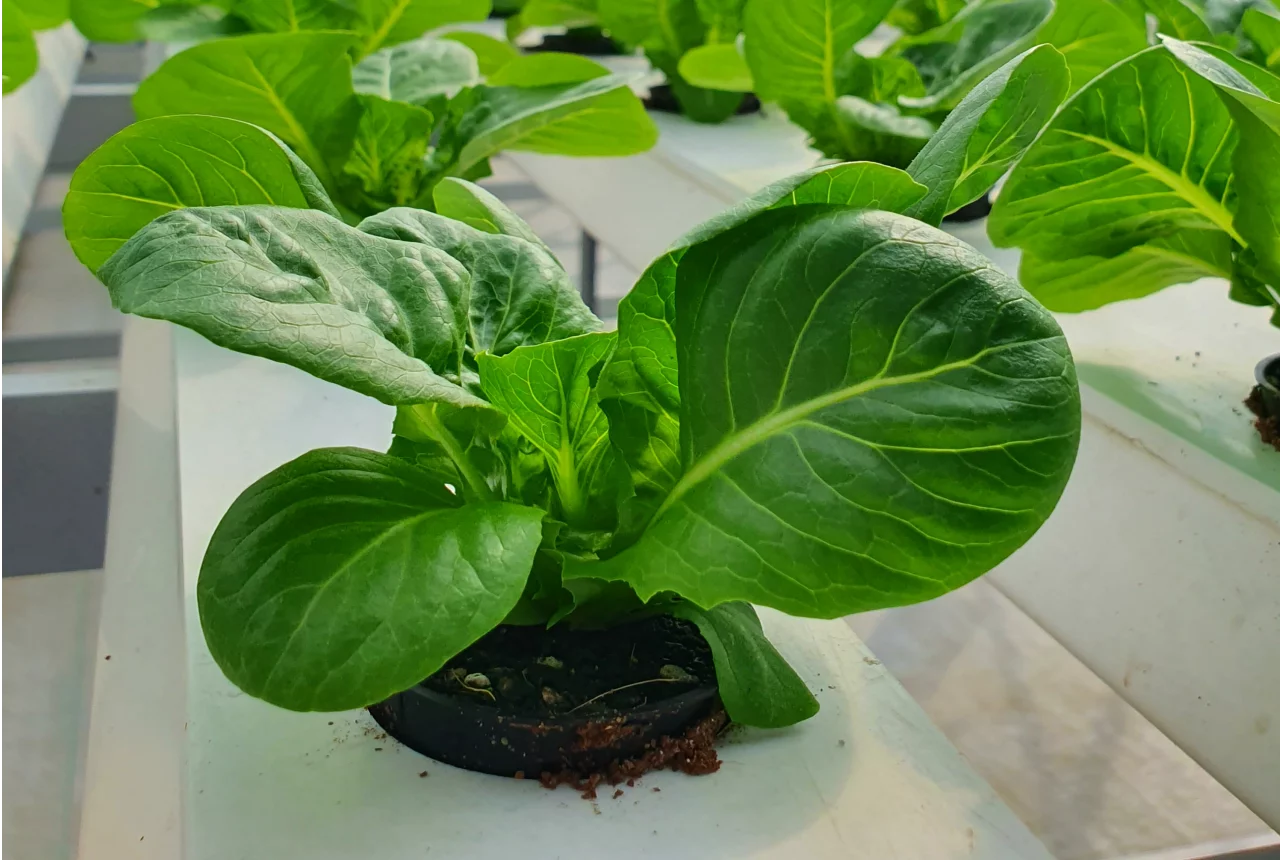
Hydroponics in commercial controlled environment agriculture (CEA) is not simply a method of growing plants without soil. It is an engineered production system where plant performance is determined by the interaction of nutrient chemistry, root-zone physics, water recirculation, oxygen transfer and automated control. This article provides a technical, engineering-focused overview of hydroponic systems as used in commercial greenhouses and indoor farms.
Rather than repeating basic definitions, this guide explains how hydroponics actually functions at scale, why it behaves differently from soil-based cultivation, and which design and operational factors determine success or failure in professional CEA operations.
What hydroponics really is in commercial CEA systems
In a commercial context, hydroponics should be understood as a managed nutrient delivery and root-zone control system. Plants are not simply fed with a nutrient solution; instead, the system continuously balances water availability, ionic concentration, oxygen supply and temperature around the root zone.
Unlike soil, hydroponic systems have:
- No inherent buffering capacity for nutrients or pH
- Very limited biological resilience
- Fast system-wide response to any operational change
This makes hydroponics extremely precise, but also unforgiving. Small errors in EC, pH, oxygen or temperature propagate quickly across the entire crop.
Video by KING PROCESS
Why hydroponics behaves differently from soil-based cultivation
The key difference between hydroponics and soil systems lies in the absence of a physical and biological buffer. Soil acts as a reservoir for nutrients, water and microorganisms. In hydroponics, the nutrient solution itself becomes the only medium governing plant uptake.
As a result:
- Changes in EC immediately affect osmotic pressure at the root surface
- pH shifts directly influence ion availability
- Root-zone oxygen levels depend entirely on system design and flow
This explains why hydroponic crops often show faster growth responses, but also why stress symptoms can appear suddenly and uniformly across the facility.
Core hydroponic system architectures
Commercial hydroponics typically relies on a limited number of system architectures. Each has distinct hydraulic, oxygenation and maintenance characteristics.
NFT systems in commercial production
Nutrient Film Technique (NFT) systems deliver a thin film of nutrient solution along the root surface. They are commonly used for leafy greens and herbs under controlled conditions.
Key characteristics:
- Low solution volume and fast nutrient turnover
- High sensitivity to pump failure
- Strong dependence on uniform channel slope and flow rate
NFT systems are efficient, but they require highly reliable hydraulics and monitoring, especially in warm environments where root-zone oxygen can become limiting.
DWC and RDWC systems
Deep Water Culture (DWC) and Recirculating DWC (RDWC) systems immerse roots in aerated nutrient solution. They provide a stable root environment when properly designed.
Key design considerations include:
- Dissolved oxygen concentration
- Water temperature stability
- Uniform circulation across tanks
RDWC systems require careful hydraulic balancing to prevent dead zones and ensure consistent nutrient distribution between modules.
Drip irrigation and substrate-based hydroponics
Drip systems combined with inert substrates (coco coir, rockwool, perlite) are widely used for fruiting crops. In these systems, the substrate partially replaces soil buffering.
However, nutrient management remains critical, as salts can accumulate in the root zone if leaching fractions and irrigation timing are poorly controlled.
Nutrient solution as a dynamic system
In hydroponics, the nutrient solution must be treated as a continuously evolving chemical system. Plant uptake changes ionic ratios over time, even if EC appears stable.
EC, ion balance and nutrient uptake
Electrical conductivity (EC) represents total ionic concentration, but does not describe nutrient balance. A stable EC can mask deficiencies or excesses of individual ions.
| Parameter | Typical Range (Leafy Greens) | Operational Impact |
|---|---|---|
| EC | 1.2–2.0 mS/cm | Osmotic pressure, uptake rate |
| pH | 5.5–6.5 | Ion availability |
| Dissolved Oxygen | >6 mg/L | Root respiration |
Professional systems therefore rely on periodic solution replacement or advanced nutrient monitoring rather than EC alone.
pH control and buffering capacity
Hydroponic solutions have limited buffering capacity. Rapid pH drift is common due to selective ion uptake by plants.
Automated acid/base dosing systems must be carefully tuned to avoid oscillations that stress the root system.
Root-zone environment and oxygen management
Root health in hydroponics depends primarily on oxygen availability and temperature control. Even short periods of hypoxia can reduce nutrient uptake and increase disease susceptibility.
Dissolved oxygen requirements
Most hydroponic crops perform optimally when dissolved oxygen levels remain above 6 mg/L. Below this threshold, root respiration becomes limiting.
Root-zone temperature effects
Nutrient solution temperature strongly affects oxygen solubility. As temperature increases, oxygen availability decreases, making cooling strategies critical in warm climates.
Recirculation, filtration and water quality management
Recirculating hydroponic systems accumulate organic matter, root exudates and microbial populations. Without adequate filtration, water quality degrades over time.
Mechanical filtration
Screens, drum filters or cartridge filters remove suspended solids that would otherwise promote biofilm formation.
Biological stability and pathogen risk
While complete sterilization is rarely practical, UV or ozone treatment is often used to limit pathogen pressure without disrupting beneficial microbial communities entirely.
Automation, sensors and control loops in hydroponic systems
Modern commercial hydroponics relies heavily on automation. Sensors for EC, pH, temperature and dissolved oxygen feed control loops that regulate dosing, circulation and alarms.
Well-designed systems include redundancy and fail-safe logic to prevent crop loss during equipment failure.
Common operational mistakes in commercial hydroponics
- Relying on EC alone without monitoring ion balance
- Underestimating oxygen demand in warm conditions
- Inadequate filtration in recirculating systems
- Poor calibration of sensors and dosing equipment
When hydroponics is not the optimal production method
Hydroponics is not universally superior. Crops with long cycles, high buffering requirements or limited market value may perform better in substrate or soil-based systems.
A proper system selection should consider crop type, labor availability, water quality and operational expertise.
Key takeaways for commercial CEA operators
Hydroponics offers unmatched control and productivity when properly engineered. However, success depends on understanding the system as an integrated whole: nutrients, water, oxygen, temperature and automation must work together.
For commercial operators, hydroponics is not a shortcut, but a powerful tool that rewards precision, monitoring and disciplined operation.